
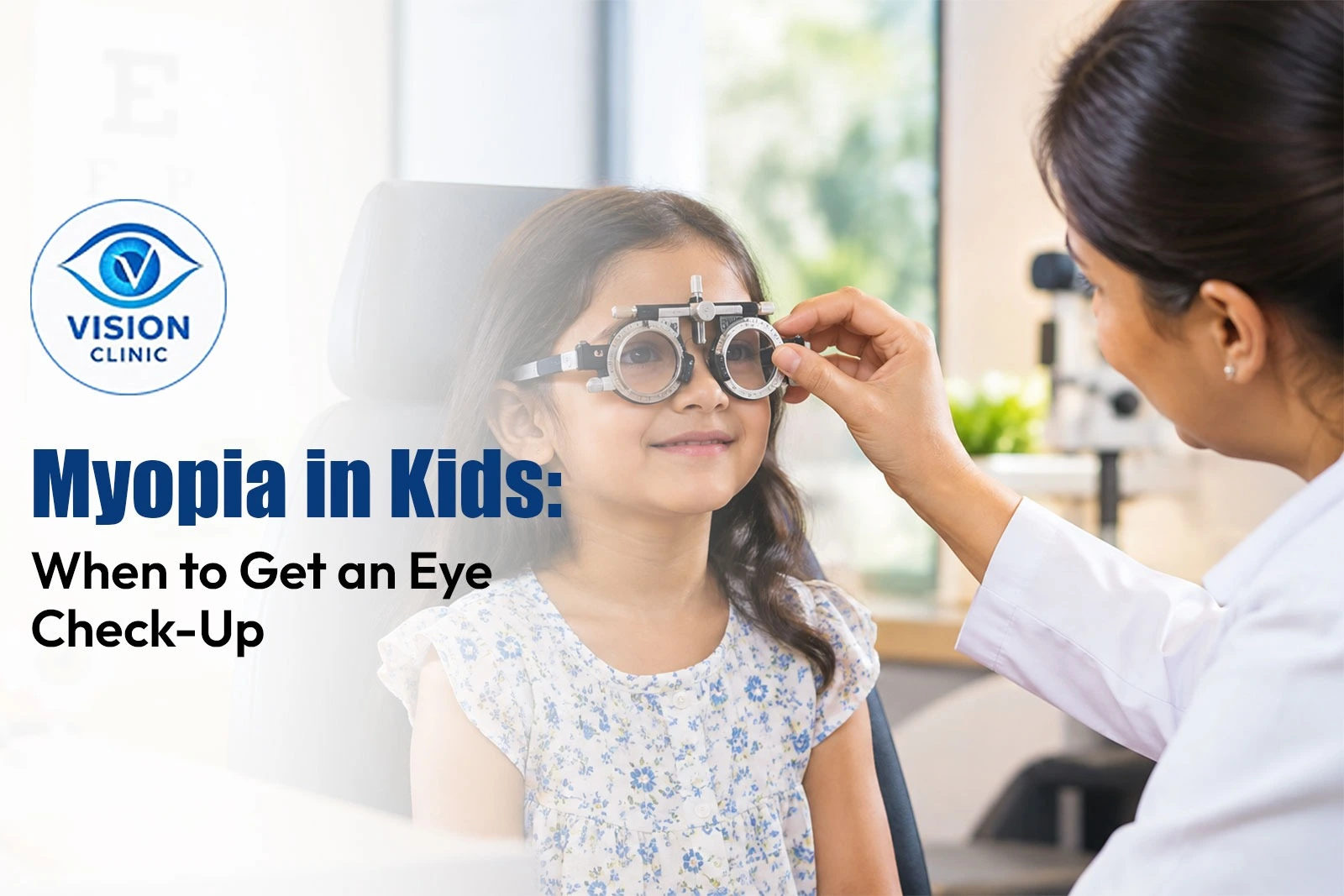
Your child squints at the board. Sits inches from the TV. Complains of headaches after school.
Sound familiar?
Looking for Myopia Treatment in Vrindavan Yojana, Lucknow is often the first step parents take when they notice these signs. It is a smart step. Myopia (short-sightedness) is rising fast among children, and the earlier it is caught, the easier it is to slow down.
This guide explains the warning signs and exactly when to book an eye check-up. No jargon. Just clear answers.
What Is Myopia?
Myopia means your child sees nearby things clearly, but distant things look blurry.
It happens when the eyeball grows a little too long. Light then focuses in front of the retina instead of on it.
Think of a camera that cannot focus on faraway objects. That is a myopic eye.
Here is the important part. In children, the eye keeps growing. So myopia often gets worse year after year, until the late teens or early twenties.
That is why "wait and see" is risky.
Why Are So Many Kids Becoming Short-Sighted?
Doctors see myopia rising in cities across India. Researchers estimate that nearly half the world could be myopic by 2050.
The main reasons are simple:
- Family history. If one or both parents wear glasses for distance, the child's risk goes up.
- Too much near work. Long hours of homework, reading and tablet use strain the eyes.
- Too little outdoor time. Daylight and distance viewing help protect growing eyes.
- Long screen time. Phones, online classes and gaming all add to close-up focusing.
The good news? Some of these are in your hands.
10 Warning Signs of Myopia in Children
Young children rarely say, "I can't see." They think everyone sees the way they do.
So watch their behaviour. Look for these signs:
- Squinting or narrowing the eyes to see far
- Sitting very close to the TV or the classroom board
- Holding books or phones close to the face
- Frequent eye rubbing
- Headaches, especially after school or screen use
- Tired or watery eyes
- Head tilting or covering one eye
- Blinking too much
- Poor marks or losing interest in studies
- Avoiding sports or outdoor games
Even one or two of these signs are enough to book a visit.
When Should a Child Have an Eye Check-Up?
This is the question every parent asks. Here is a simple guide.
| Child's Age | What to Do |
|---|---|
| Newborn to 6 months | Basic eye screening by the paediatrician or eye specialist |
| 6 months to 1 year | Check for alignment, tracking and early vision problems |
| 3 to 4 years | Full eye check-up for clarity, squint and lazy eye |
| 5 to 6 years (before or at school entry) | Complete eye exam, even if there are no complaints |
| 6 to 18 years, no problems | Check-up every 1 to 2 years |
| Any age, wearing glasses | Check-up every 6 to 12 months |
| Any age, with warning signs | Visit as soon as possible |
Two more rules matter here.
Rule 1: If one or both parents have myopia, start regular check-ups early. Do not wait for symptoms.
Rule 2: If the school flags poor board vision, book within a few weeks. Do not wait for the next term.
"But My Child Says Everything Is Fine"
This is the trap many parents fall into.
Children adapt. They move closer to the screen. They copy from a friend. They guess.
A child may hide blurry vision for years without knowing anything is wrong.
Also, a school vision chart can miss mild problems. It only checks distance clarity. It does not check eye focusing, eye alignment or eye health.
So a "pass" at school does not replace a proper eye exam.
What Happens During a Child's Eye Exam?
Many parents worry their child will be scared. Relax. A child's eye check-up is quick, gentle and painless.
Here is what usually happens:
- History. The doctor asks about symptoms, screen habits, school issues and family eye history.
- Vision check. The doctor tests how well each eye sees, using age-friendly charts.
- Number check-up. The doctor measures the exact spectacle power (refraction).
- Eye alignment and movement. This rules out squint and focusing problems.
- Eye health check. The doctor looks at the front of the eye and the retina.
- Drops, if needed. Sometimes eye drops relax the focusing muscle. This gives a truly accurate number in children.
- Clear advice. You learn what was found, in plain language.
Tip: your child may see a little blurry for a few hours after drops. Plan a relaxed afternoon.
Why Early Action Matters
Low myopia can look harmless. It is just "a small number", right?
Not always.
The higher the number climbs, the greater the long-term risk. High myopia is linked with:
- Retinal tears and retinal detachment
- Glaucoma
- Early cataract
- Damage to the central retina (myopic maculopathy)
We do not say this to scare you. We say it because every step of progress you prevent in childhood protects your child's eyes for life.
Early detection gives you more options. Late detection gives you fewer.
Can Myopia Be Slowed Down?
Glasses correct blurry vision. They do not always stop the number from rising.
That is why doctors now talk about myopia control. The goal is simple: slow the progress and keep the final number lower.
Depending on your child's age, number and eye health, the doctor may discuss options such as:
- Correct spectacles, worn regularly and updated on time
- Low-dose atropine eye drops, prescribed and monitored by an eye doctor
- Special lenses, such as myopia-control spectacle lenses or contact lens options for suitable children
- Lifestyle changes, which help every child
Not every option suits every child. Never start drops or lenses on your own. A proper exam comes first.
8 Simple Habits That Protect Growing Eyes
You do not need to fight with your child. Small changes work best.
- Send them outside. Aim for about two hours of outdoor daylight time each day.
- Follow the 20-20-20 rule. Every 20 minutes, look at something 20 feet away for 20 seconds.
- Keep a book distance. Reading distance should be around 30 cm (a forearm's length).
- Limit recreational screens. Keep phone and tablet time short and structured.
- Use good lighting. Study in bright, even light, not in a dim room.
- Take homework breaks. Short breaks reduce eye strain.
- Encourage sleep. Rested eyes focus better.
- Set an example. Children copy parents. Put your own phone down too.
Common Myths About Myopia
Myth: Glasses make the eyes weaker.
Fact: Glasses do not weaken eyes. They help your child see clearly and learn better.
Myth: Eye exercises cure myopia.
Fact: Exercises can relax tired eyes, but they cannot shorten an eyeball or remove the number.
Myth: Eating carrots fixes eyesight.
Fact: A healthy diet supports eyes. It does not cure myopia.
Myth: Kids outgrow myopia.
Fact: Myopia rarely goes away. It usually stays and often increases through the teen years.
How Dr. Richa Tripathi, Vision Clinic Can Help
Choosing the right Eye Doctor in Vrindavan Yojana, Lucknow gives your child a steady partner for the growing years. Myopia is not a one-time visit. It needs regular follow-ups, so a clinic close to home makes the difference.
At Dr. Richa Tripathi, Vision Clinic, every child gets:
- A detailed vision and number check-up
- Clear, jargon-free explanations for parents
- Honest advice based on your child's needs, without pressure
- Follow-up visits to track any change in number
Many local families look for the best eye clinic in Vrindavan Yojana because they want care that is personal, patient and easy to reach. Dr. Richa Tripathi is an MS-qualified ophthalmologist who sees each patient directly and explains every finding.
The clinic is open from 3:30 PM to 7:30 PM. That is convenient after school hours. Sunday visits are by prior appointment.
Quick Checklist: Book a Visit If...
- Your child has never had a full eye exam
- One or both parents wear glasses
- Your child squints, rubs eyes or gets headaches
- The school teacher reports trouble seeing the board
- Your child's glasses are more than a year old
- Your child's power seems to change every few months
Tick even one box? It is time.
Frequently Based Question
Final Thoughts: Do Not Wait for the Blur to Get Worse
Good vision is the foundation of learning, confidence and play. Children rarely complain. So parents must look for clues and act early. Remember the key points:
- Book a first full eye exam before school age
- Repeat every 1 to 2 years, or sooner if there are signs
- Increase outdoor time and cut down close-up strain
- Never self-treat with drops or lenses
Ready to check your child's eyes?
Book an appointment with Dr. Richa Tripathi at Vision Clinic today.
This blog is for general awareness and does not replace a personal eye examination.